Why 60 Minutes suddenly discovered the placebo effect in treating depression

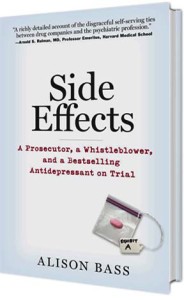
When Dr. Irving Kirsch published his meta-analysis in PLoS Medicine in February 2008 showing that antidepressants were no more effective than a placebo in treating mild or moderate depression, the national news media ignored his explosive findings, for the most part. And when I published Side Effects a few months later, exposing the deception behind the making of the bestselling antidepressant Paxil, they were similarly unresponsive. While my book received great reviews and a lot of attention from regional radio outlets, the national broadcast media pretty much ignored the story. Indeed, a studio interview I did with Kai Ryssdal on American Public Media’s Marketplace never aired, perhaps because of the pressure Paxil’s maker, GlaxoSmithKline, brought to bear on Marketplace’s producers.

So it was with some bemusement that I watched the 60 Minutes segment on antidepressants, which focused on Kirsch’s 2008 finding that antidepressants are no better than placebo in treating most forms of depression. In the segment, Kirsch, who is now associate director of the Program in Placebo Studies at Beth-Israel Deaconess Hospital, noted that the reason many patients feel better after taking antidepressants is not because of the drug’s effect, but because of the powerful placebo effect in making them feel better.

Why, I wondered, was 60 Minutes taking note of this now, four years after Kirsch published his meta-analysis and two years after he published his own book on the subject, The Emperor’s New Drugs?

Here is one very plausible reason, as articulated by Dr. Stephen Greer in a CurrentTV column today: because the patents for most of these blockbuster antidepressants (like Paxil and Prozac) have expired and the drug companies, who advertise heavily on television, are no longer pressuring the national media to stay mum.

As Greer notes, “it is quite rare for national TV news to report on any data critical of blockbusters despite plenty of research over the last several decades questioning the risk/benefit profile of numerous commonly used drugs.”

So why now? As he points out:

The most likely explanation is that the same drugs now being exposed as unsafe and ineffective have also lost patent protection and therefore, are no longer generating the huge advertising revenue for the networks. A significant portion of the revenue for the broadcast networks is derived from pharmaceutical advertisements.

I think Greer’s on to something. Don’t you?

Posted in antidepressants, conflicts of interest, drug marketing, health care costs, pharmaceutical industry | Tagged , , , , | 9 Comments

When it comes to scientific misconduct, should there be a statute of limitations?

I was hesitant to weigh in at first when I learned that Brown University’s School of Medicine had decided not to pressure a psychiatric journal to retract the seriously flawed Paxil study that I wrote about in Side Effects. After all, Brown has been covering up misconduct by the study’s principal investigator, Martin Keller, for decades; so why would it suddenly change its tune now?

What bothers me as much as Brown’s refusal to do the right thing (and provide an ethical example to its students) is the stance that the Office of Research Integrity at the Department of Health and Human Services has taken in response to the study. As I and many others have noted, researchers misrepresented data in study 329 to make Paxil look safer and more effective than it really is — see here, here and here.

The Paxil study, which was published in August 2001 by the Journal of the American Academy of Child and Adolescent Psychiatry, purported to show that Paxil was safe and effective in treating depression in adolescents, when in fact actual data from the trial showed the opposite. Even the FDA concluded that study 329 was a negative finding — that it failed to show Paxil was more effective than a placebo.

So what reason does the federal Health and Human Services’ Office of Research Integrity give for why they won’t investigative allegations of scientific misconduct here? As Pharmalot reports, the director of that office falls back on old rhubarb: a statute of limitations. In a letter to Jon Jureidini, the Australian researcher who has led the effort to win a retraction, John Dahlberg writes: “…allegations of falsification, fabrication or plagiarism must be made within six years of the alleged misconduct…”

Yet investigators for the FDA and HHS were well aware of potential misconduct with regard to study 329 before any statute of limitations expired. Not only had I been in touch with federal officials asking questions about serious flaws in the study while I was doing research for my book in 2006 and 2007 (my book was published in June 2008), but Jureidini and Leemon McHenry published a paper in early 2008 pointing that the study 329′s researchers had changed the primary outcome measures and skewed data in other ways to make Paxil look safer and more effective than it really was. As I mentioned earlier, the FDA had decided as far back as 2004 that study 329 didn’t show efficacy despite its published claims.

So all the clues to scientific misconduct were there well before any six-year statute of limitations. This is why Dahlberg’s argument seems completely specious to me.

As for Brown University School of Medicine, its dean should be hanging his head in shame. Joel Lexchin, a professor of health policy at York University in Toronto and one of the academics who signed the letter to Brown University pressing for a retraction, says it best, according to Pharmalot:

“I find it very disturbing that a university that is suppose to be standing up for the highest academic values is unwilling to take any action when its faculty members violate those values.”

Posted in antidepressants, clinical trials, conflicts of interest, FDA, ghostwriting, pharmaceutical industry, scientific journal retractions, scientific misconduct | 4 Comments

Enforcing anti-kickback laws: a powerful deterrent against ghost-writing in medicine

The Obama administration recently made it clear that it will require drug companies to disclose the payments they make to doctors for research, consulting, speaking, travel and entertainment under the new health care law — see the New York Times. Large numbers of American doctors receive payments from drug and device companies every year –  sometimes amounting to hundreds of thousands or millions of dollars — and the new standards will hopefully have a deterrent effect on these financial conflicts of interest.

However, the new disclosure standards only apply to products covered by Medicare and Medicaid. And federal law does not prohibit doctors from accepting such largesse; it only mandates that the companies disclose the payments to the federal government, which will then post the payment data on a publicly available website. Hence, doctors in the private sector can continue to take what some call “kickbacks” in exchange for promoting drugs and medical devices at conferences and in medical journal articles.

This may explain why researchers have recently called for both stricter enforcement of anti-kickback statutes already on the books and for the passage of federal legislation that would prohibit such kickbacks to doctors in the private sector. In a recent overview article in the Journal of Law, Medicine and Ethics, Mark Rodwin, a professor of law at Suffolk University, notes that the U.S. (unlike France, for instance) only prohibits kickbacks — in the form of gifts, speaking and consulting fees, entertainment and travel reimbursement — for publicly employed doctors, not for the majority of U.S. physicians working in the private sector. So Rodwin, who is also an Edmund J. Safra Fellow at Harvard University, urges Congress to ban such kickbacks to all physicians.

Most physicians object to what he calls “abnormal corruption: explicit kickback payments” for prescribing or purchasing drugs, he notes. Yet many accept what he calls “normal corruption: influence through gifts and financial support.”

Not only should Congress ban kickbacks for all doctors, Rodwin argues, but the U.S. (along with France and other countries) should create an alternative to pharmaceutical industry funding for professional medical activities. He suggests that policy makers tax drug companies and other commercial interests that support continued medical education (CME) activities and then have an independent government or quasi-government agency distribute those funds for such activities. As Rodwin explains:

“When consumers and public authorities pay these expenses directly, they eliminate a major source of dangerous conflicts of interest that compromise medical practice.”

Consumers, after all, are already paying for the huge investment drug and device companies make to influence physicians — in the form of high drug prices. So why not use this approach to keep drug and device companies at arms’ length from medical education? Are you listening, Congress?

In the meantime, federal and state officials could do much more to deter what Rodwin calls “institutional corruption” by enforcing anti-kickback and false claims laws that are already in the books. In an article published Tuesday in PLoS Medicine, three researchers argue that physicians who attach their names to journal articles ghost-written by medical contractors working for the drug industry may be legally liable under these existing statutes.

They argue that prominent physicians or key opinion leaders who are paid speaking and consulting fees by drug companies and then attach their names to ghost-written articles that tout company products could be named as co-conspirators in a False Claims Act (whistleblower) lawsuit, along with the manufacturer. Physicians could also be charged with receiving kickbacks in exchange for appending their names to ghost-written articles, under the current anti-kickback statute. Right now, guest authors are rarely named as defendants in either personal injury lawsuits or government cases alleging the illegal marketing of off-label drugs.

As I mentioned earlier, both of these statutes only apply to drugs that are covered by Medicare and Medicaid, but since most new drugs are covered by these government programs, that would encompass the vast majority of physicians who attach their names to articles ghost-written at the behest of drug companies.

As the PLoS Medicine authors argue, merely attaching the names of KOLs to such lawsuits would create a powerful deterrent against an unethical but still widespread practice in medicine — ghostwriting. So why the heck not?


Posted in antidepressants, conflicts of interest, continuing medical education, drug marketing, ghostwriting, pharmaceutical industry, university industry collaboration | Tagged , , , , , | Leave a comment

From the Pentagon Papers to Allen Jones: Why it’s so hard to be a whistleblower

Allen Jones, the whistleblower in an ongoing landmark trial against the pharmaceutical giant Johnson & Johnson, was very much on my mind this past weekend. I was participating in a workshop to develop curriculum to teach college students about the importance of standing up for their ethical values and if necessary, blowing the whistle on wrongdoing in their place of employment. The workshop in Washington, D.C. was sponsored by the Government Accountability Project (GAP), a nonprofit organization that represents whistle-blowers of all stripes from Daniel Ellsberg, who leaked the Pentagon Papers, to Allen Jones, who blew the whistle on the illegal payments Johnson & Johnson was making to state employees to promote the off-label use of its anti-psychotic drug, Risperdal, in children.

Jones first noticed these illegal payments when he was investigator for the state of Pennsylvania’s Office of Inspector General. He discovered that the state’s top pharmacist, the guy in charge of deciding what drugs should be included in its Medicaid formulary, was receiving hidden payments from J&J, the maker of Risperdal. Jones was fired when he brought those illegal payments to light, but he persevered, and with the help of GAP, won a lawsuit against the state of Pennsylvania and eventually saw the state pharmacist who was on the take fired from his job.

As 1boringoldman and others have detailed, Jones went on to sue J&J in the state of Texas, where public officials were also being paid to fly all over the country and promote the off-label use of Risperdal in children — see my blog on that case here. J&J has settled a number of other state lawsuits for the illegal and deceptive marketing of Risperdal — as I’ve blogged about here, a South Carolina judge fined the company $327 million last year, calling J&J’s actions “detestable” — but this is the first time the company has gone on trial for its illegal actions in hiding the serious side effects of Risperdal in children — weight gain, diabetes, even causing breast lactation in teenage boys — and illegally marketing the drug off-label.

And it’s all because of Allen Jones. As I sat around the conference table this weekend and heard one horror story after another about folks who spoke truth to power and ended up losing their jobs and being permanently blacklisted from employment in their chosen field, it made me wonder why it’s so difficult to be a whistle-blower in our society. (In the case of former Department of Justice lawyer Jesselyn Radack, whose book A Canary in the Coal Mine I just finished reading, the Bush administration was so bent on retaliating against her for blowing the whistle on the administration’s failure to give an American citizen arrested in Afghanistan his due rights to legal counsel that they not only prevented her from getting another legal job in the private sector but they also put her name on the No Fly list, making her subject to humiliating body searches every time she tried to board a plane). Yet like Radack, most whistle-blowers are people who are simply trying to do the right thing and stand up to injustice, corruption or abuses in the corporate or public sector.

So why it is so difficult to raise ethical concerns today? It’s true that derogatory words like snitch, rat and tattle-tale have always been a part of our culture, and there’s no question that corporations put a premium on loyalty and conformity. But despite Congressional efforts to protect whistle-blowers (with the Whistleblower Protection Act), it seems to be more difficult than ever to speak up. Even though more workers are witnessing violations of company rules, retaliation against employees has risen to a new high, the 2011 National Business Ethics Survey found. More than a fifth of employees who reported a violation at work said they experienced some kind of retaliation, according to the Huffington Post. Most of those employees, of course, never went any further and leaked the information to the media, as Radack and Ellsberg did, subjecting both of them to enormous retaliatory pressures, such as concocted criminal charges.

Even the mainstream media seems to have tacitly accepted the idea that whistle-blowers are villains, belonging in the same category as evil plaintiff’s lawyers. Exhibit A: in yesterday’s page-one New York Times story about the Obama administration’s plans to require drug makers to disclose fees to doctors under the landmark Physician Payment Sunshine Act, which I’ve blogged about here, the reporter quotes an official with the medical technology association, a trade group for medical device companies, as saying that the required payment data “could be used by federal law enforcement agencies, plaintiffs’ lawyers and whistleblowers.”

Heaven forbid!


Posted in antipsychotic drugs, conflicts of interest, drug marketing, expert testimony, media coverage, pharmaceutical industry, whistleblowing | Tagged , , , , , , , | 5 Comments

Here’s to a New Year without our own breast implant scandal

In preparing for the holidays, you may have missed the French scandal over the defective artificial breasts implanted in hundreds of thousands of women. According to NPR, an estimated 400,000 women worldwide have received the faulty implants, and 30,000 women in France have been urged to have them removed because the implants used an inferior, industrial-grade silicone and are more likely to rupture than those made from surgical silicone, causing damaging tissue inflammation. One woman with ruptured implants recently died of cancer, NPR reports.

The defective implants, made by a French company, should come as no surprise, says French public health specialist Dr. Alain Braillon. More than a year earlier, he published a letter in the Archives of Internal Medicine calling attention to the fact that the chief executive officer of the French regulatory counterpart to the FDA had an extremely cozy relationship with Medtronics, a medical device company. He and a Medtronics official apparently collaborated on a book about medical devices that criticized regulatory oversight as getting in the way of innovation.

While this amazingly conflicted official was eventually forced out and French regulations tightened in the wake of another drug scandal — see here – Braillon says the French response is late in coming and little more than “window-dressing.”

The French debacle serves as a vivid reminder of what’s at stake on this side of the Atlantic, as lobbyists for the medical device industry continue to push hard against recommendations by the national Institute of Medicine (IOM) to tighten up our own oversight of new medical devices. As the New York Times reported last fall, Republicans in Congress, at the industry’s bidding, have introduced a flurry of bills designed to speed up the FDA approval process for medical devices. Their legislative action flies in the face of the nation’s medical experts, who argue that we need to strengthen the process of approving new medical devices, not weaken it.

The IOM recommendations, of course, come in the wake of our own uniquely American scandals — faulty metal to metal hip implants that have injured thousands of Americans and a host of other unsafe medical devices that have made it to market. Here’s hoping that Congress and the FDA do the right thing in the New Year and adopt the IOM recommendations, instead of waiting for our own breast implant scandal.

On another note, a landmark trial against Johnson & Johnson is slated to begin Monday (January 9) in a Texas courtroom. As I and many others have blogged about here and here, J&J is charged with illegally marketing the off-label use of Risperdal and “subverting scientific integrity” by paying off academic psychiatrists and state officials to boost the use of its antipsychotic among children and adults. The case, as 1boringoldman writes, is more ambitious than previous state lawsuits against off-label drug marketing:

It’s about an active campaign to undermine Medicine itself and medical learning, and to bilk state governments.

1boringold man (a.k.a. psychiatrist Mickey Nardo) is hoping for a Watergate-sized expose to emerge from the trial. So stay tuned…


Posted in Uncategorized | 1 Comment

UnitedHealth Group: A case example of the problem with for-profit health care

A few weeks before Thanksgiving, my husband, a hospice social worker, was told that his hours were being cut back from full to part-time. The explanation given to him, a six-year employee with solid performance reviews, was that the hospice’s census had declined and could no longer support a full-time bereavement counselor. The fact that my husband had taken on an extra caseload of individual hospice patients and families (on top of his bereavement duties) didn’t seem to register with his new bosses.

It was only after reading this recent article that I understood the real reason behind the reduction in pay foisted on my husband and another social worker at the same hospice. They worked for a subsidiary of the for-profit health care company, UnitedHealth Group, whose CEO has the highest CEO-to-worker pay ratio of any Fortune 50 company in the United States. According to the Minneapolis Business Journal, Stephen Hemsley made 1731 times what the typical UnitedHealth worker made last year, or $1731 for every dollar they made. Hemsley was paid nearly $102 million last year, while the median annual pay among the company’s 80,000 employees was $58,700, according to a survey done by PayScale.com.

That salient fact may also explain why UnitedHealth Group went after my husband, essentially forcing him to look for another job. As a seasoned social worker, he was earning well more than the median income most UnitedHealth nurses and social workers make. And he was not the only “over-paid” UHG employee to feel the heat. A colleague of his at the same hospice who was also earning more than the median income was made to feel so uncomfortable that she read the tea leaves and found another job before the axe fell on her as well.

Now, there’s no question that in the current economic environment, hospices, along with nursing home facilities and home health care services, face a challenging future. Even though hospice and palliative care for dying people is much less expensive than the end-of-life care routinely given to terminally ill patients in hospitals, the federal Centers for Medicare and Medicaid Services (CMS) are implementing drastic cuts in hospice reimbursement, which will amount to about $12 billion in total cuts to the hospice industry over the next few years, according to the National Association for Home Care and Hospice. So both non-profit and for-profit hospices have reason to worry about their bottom lines.

But why take those cuts out of the hides of the nurses and social workers on the front lines of hospice care every day? Why not do something about the exorbitant pay for top executives at for-profit health companies? I don’t care how successful UnitedHealth Group is on Wall Street; there is no reason why its CEO should be earning $102 million a year when its front-line workers are being put out of work. And indeed, one article I read in the Hospice Management Advisor, (a subscription-only journal), cautioned hospices not to lay off or reduce the hours of its caregivers because that hurts the morale of the entire organization and prompts other employees to seek employment elsewhere (which is exactly what’s happening at my husband’s former hospice).

To me, this case illustrates the fundamental problem with for-profit health care. In hospice (as in all of health care), the needs of patients and their families should be the first priority. But in for-profit companies, the first priority is creating wealth for top executives (like Stephen Hemsley) and its shareholders, and when that results in lay-offs and pay reductions for front-line workers, continuity of care is disrupted and patients and their families suffer. My husband was lucky enough to find another full-time job fairly quickly, but the patients and families at his former hospice lost a compassionate caregiver days before the holidays. That’s no way to run a hospice.

Posted in Uncategorized | 5 Comments

While French officials tighten regulations about conflicts of interest, US legislators are heading in the opposite direction…

I almost choked over my tea this morning when reading this The New York Times story, the gist of which was that French regulations governing conflicts of interest in medicine are considerably more lax than our own. If only that were true.

The NYT article described how a recent scandal over Mediator, a French drug belatedly withdrawn from the market after causing a number of deaths and severe heart problems, has prompted widespread calls for change in the French regulatory system. But while the piece mentioned in passing that the French have passed a package of reforms, it failed to note just what those reforms consisted of: that in response to this scandal, the French National Assembly has already passed a strict law mandating the disclosure of conflicts of interest among scientists who advise government officials about new drugs — see Pharmalot. This law requires external experts and health ministry staffers to declare all conflicts or face a $40,000 fine. The French response is far stricter than anything our own regulatory officials at the FDA or NIH have come up with so far.

The Times article points out there are no penalties for voting members of the French equivalent to the FDA who fail to disclose conflicts of interest, while it is a crime to do so here. While it may be against the law for FDA officials to have undisclosed conflicts of interest, it is not a crime for advisory members of the FDA or other researchers who fail to disclose such conflicts. Indeed, not a whole lot happens to the vast majority of academic researchers who fail to disclose the fact that they are getting payments on the side from the same drug companies whose drugs they are touting in medical journals and conferences or on FDA advisory panels. As I and others have blogged about before here and here, that’s primarily because it is left up to universities to sanction these researchers, and universities don’t want to bite the hand that feeds them. The only academic who was asked to step down because of failing to report egregious conflicts of interest was Charles Nemeroff at Emory. As we all know, Nemeroff was promptly scooped up by the University of Miami School of Medicine who was more than happy to have a pharmaceutical company rainmaker on its payroll.

What today’s Times piece also failed to note is that the FDA’s conflict of interest regulations are under attack in Congress. According to Pharmalot, several U.S. Senators has introduced a bill that would reverse FDA regulations that bar experts with financial ties to drug or device makers from serving on the committees without a waiver.

So at the very time that the French are tightening their regulations to better protect the public health, officials on this side of the Atlantic are trying to weaken U.S. consumer protections. But you wouldn’t know that from reading today’s New York Times.

Posted in Uncategorized | 2 Comments

Deceptive drug research practices explain why over-medicating of children still going on

A new report from the U.S. Government Accountability office confirms something that Rose Firestein, the eponymous prosecutor in the title of Side Effects: A Prosecutor, a Whistleblower and Bestselling Antidepressant on Trial noticed way back in the ’90s: that children in foster care were being over-medicated with antidepressants and atypical anti-psychotic drugs. Indeed, that’s why Firestein decided to probe the deceptive marketing of these psychoactive drugs when she went to work for the New York State Attorney General’s office in 2002.

Now, of course, comes the GAO report finding that foster children have been prescribed such psychotropic drugs at rates 2.7 to 4.5 times higher than children not in foster homes, despite the lack of evidence about their safety or effectiveness in this age group. This isn’t news to those of us who have been writing and blogging for years about how drug companies have deliberately targeted the off-label use of these drugs in children to reap blockbuster profits.

So why do these johnny-come-lately government reports matter? For two reasons: because physicians and parents in the foster care system continue to use these drugs as chemical strait-jackets, and because the pharmaceutical industry is still employing the same deceptive tactics to sell new anti-psychotic drugs for use in children and adults, as oneboringoldman demonstrates in his blogs this week. Dr. Mickey Nardo, the psychiatrist behind oneboringoldman, tells the story of how the maker of Latuda, a schizophrenia drug, paid a CRO to run a shoddy clinical trial on the drug and hire a few for-sale psychiatrists to slap their names on the study, which was then published in the American Journal of Psychiatry.

The results from this trial were then used to convince the FDA to approve Latuda for use in schizophrenia. As a result, it can now be prescribed off-label as a drug for bipolar disorder to replace anti-psychotic drugs like Seroquel, Risperdal and Zyprexa, which were found to cause severe problems in children (like diabetes and obesity) only after they were also heavily marketed off-label for this age group. In fact, as I and many others have blogged about here and here, the illegal marketing of these drugs earned the makers of these drugs record fines.

And now, according to oneboringoldman, we have a new entry in the anti-psychotic sweepstakes. All of which makes me wonder: How long before we see foster children over-medicated with Latuda?

Posted in antidepressants, antipsychotic drugs, clinical trials, conflicts of interest, drug marketing, FDA, ghostwriting, pharmaceutical industry | Tagged , , , , , , | 2 Comments

International group seeks Brown University’s help in retracting controversial Paxil study

The international research organization Healthy Skepticism has called on Brown University to help convince a psychiatric journal to retract the controversial Paxil trial that I wrote about in Side Effects, according to the Brown Daily Herald. The principal investigator of this multi-center study is Brown professor of psychiatry Martin Keller, the former chief of psychiatry at Brown School of Medicine.

As the Herald notes:

Healthy Skepticism expressed concern that the study, which identified the drug Paxil as an effective combatant of depression in children, “seriously misrepresented both the effectiveness and the safety” of the drug. The authors added that the study’s continued citation was harmful to children, since some children committed suicide after being prescribed Paxil.

As I’ve blogged about here, The Journal of the American Academy of Child and Adolescent Psychiatry has so far refused to retract the trial, known as study 329, despite evidence of misrepresented data, ghostwriting and failure to disclose conflicts of interest on the part of its authors.

According to the Daily Herald, the dean of the medical school has declined to comment on whether Brown has even opened an investigation into Healthy Skepticism’s contention of scientific misconduct in the study. But Paul Thacker, the former Congressional aide who investigated Keller’s conflicts of interest for the Senate Finance committee, noted that even if University officials found evidence of misconduct, “they would likely ignore them, since Keller’s research has provided a steady source of University funding,” the Herald reported. Thacker went on to say that “he does not think the University should continue to receive any federal funding if it does not publicly address the Keller case.”

In case you missed it, GlaxoSmithKline, the maker of Paxil, was hit with a massive $3 billion fine earlier this month for the deceptive and off-label marketing of Paxil and other drugs in the United States. The $3 billion settlement is intended to cover a number of criminal and civil investigations into the off-label marketing of Paxil, Avandia (its anti-diabetes drug) and seven other drugs, and is the largest recorded fine against a pharmaceutical company to date, according to The Washington Post.

As I and others have pointed out, study 329 was among the deceptive marketing materials used by the Glaxo sales force to promote the use of Paxil in children and make it into a blockbuster drug.

Full disclosure: I’m quoted in the Daily Herald article.

Posted in antidepressants, conflicts of interest, drug marketing, ghostwriting, pharmaceutical industry, scientific journal retractions, scientific misconduct | Tagged , , , , , , , | 3 Comments

New drug industry partnership with hospitals could jeopardize patient care

We’ve all signed those vague privacy statements when visiting our local hospital for medical care. But how many of us have actually read the fine print and understand that the most sensitive details of our medical lives may be shared with drug companies for research purposes? And that we, as patients, may be asked to take part in a clinical trial that not only brings financial benefits for the company doing the trial but for the hospital that shared our data in the first place?

A recently announced partnership between drug companies and 13 New York state hospitals to mine patient data for clinical trials brings such questions into sharp focus, raising troubling ethical and privacy concerns, according to several consumer and privacy advocates. As Businessweek reports, this project is just one of many new initiatives being created “as medical providers, software vendors, and health data businesses seek ways to profit from the flood of clinical data now being gathered electronically.”

This particular partnership, dubbed PACeR, spearheaded by such pharm giants as Pfizer, Merck, Roche and Johnson & Johnson, would be brokered by Quintiles, a CRO that does clinical trials, and it would work like this:

The participating hospitals would provide patient data scrubbed of key identifiers (like names, addresses, social security numbers etc.) to Quintiles, and drug companies could then mine that data for potential clinical trial candidates for a huge fee (between $50,000 and $250,000 per query), a hefty portion of which would accrue back to the hospitals. Quintiles would then let the hospitals know which patients the companies would like to recruit for trials, and the hospitals would ask the doctors of those patients to see if their patients were interested in participating in the clinical trial. According to Businessweek, only the hospitals would have access to the patients’ specific identification and patients would have the final say over whether they wanted to be recruited for the study.

All well and good? Not really, privacy and consumer advocates say. First of all, there is the issue of the transparency. Most patients have no idea that their medical data is being shared with commercial entities interested in doing research. Nor do they know that the hospitals involved in this partnership stand to benefit handsomely from sharing that data.

“In order for privacy to work, you’ve got to have complete transparency,” says Lillie Coney, associate director of the Electronic Privacy Information Center, a nonpartisan research center in Washington, D.C. “You have to tell patients why you’re collecting their information and what you are going to do with it.” Just getting patients to sign a vague privacy statement when they enter the hospital doesn’t cut it, says Coney, especially when the hospital stands to benefit financially from sharing your data.

“These patients are being contacted by hospitals or doctors who have a [financial] incentive here,” Coney says. “How free is the doctor going to be to say they don’t want to do this? After all, they have to practice at the hospital.”

Not only does this kind of arrangement put pressure on doctors to sign up patients for clinical trials; it also puts pressure on the patients themselves, who may not want to antagonize their physicians by saying no.

This kind of ethical dilemma, of course, predates the existence of electronic medical records. Some ethicists believe that doctors should never be paid or pressured to recruit patients for research because that blurs their roles as caregivers and puts the doctors in a position of doing something that may not be in the best interests of their patients. (For example, patients being recruited for these trials may be taking drugs that the researchers know nothing about, leading to potentially troublesome drug interactions). And PACeR raises the ante on such troubling conflicts because it introduces big profit incentives for hospitals as well as doctors.

There is another big problem with the project, and it lies in the nature of the all-seeing Web. The founders of PACeR make a big deal about how the data will be scrubbed of identifiers in compliance with HIPAA, so the drug companies won’t know who the individual patients are. However, new technologies make it very easy for computers to link the available patient data with other public information that’s out there on the Web, allowing companies to identify individual patients.

“I think that’s a valid concern given today’s technology,” says Dr. Michael Carome, deputy director of Public Citizen’s Health Research Group. “According to HIPAA, there are 20 identifiers that have to be removed before the data is shared for research purposes, such as name, address, social security numbers, date of admission, etc. But with today’s technology, that may not be enough. Maybe nothing is truly private no matter how stripped it is.”

In sum, both Carome and Coney agree, the hospitals participating in this ambitious project should think long and hard about whether they really want to be involved in this kind of endeavor, which could jeopardize their core mission: confidential patient care.


Posted in biotech industry, clinical trials, conflicts of interest, patient care, pharmaceutical industry, Uncategorized, university industry collaboration | Tagged , , , , , , , | 1 Comment